 TECH TIMES NEWS
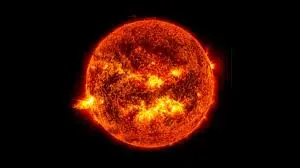
For decades, astronomers have been puzzled by a paradox: why the Sun’s outer atmosphere, known as the corona, is millions of degrees hotter than its surface. Now, a team of scientists may have uncovered the mechanism behind this cosmic enigma, providing new insight into the complex workings of our star.
New Findings from Advanced Space Observations
Researchers from multiple international institutions utilized data from NASA’s Parker Solar Probe and the European Space Agency’s Solar Orbiter to study magnetic fields at unprecedented proximity to the Sun. Their findings suggest that tiny, rapid magnetic explosions—known as “magnetic reconnection events”—could be responsible for transferring immense energy from the Sun’s surface into its outer layers.
The Role of Magnetic Nanoflares
These minute bursts, often referred to as nanoflares, release enormous amounts of energy in fractions of a second. When occurring in large numbers, they could collectively heat the solar corona to over a million degrees Celsius—far exceeding the surface temperature of roughly 5,500°C. The new data supports long-standing theories proposed by astrophysicist Eugene Parker, after whom the solar probe is named.
Direct Evidence from Solar Missions
The Parker Solar Probe’s recent close passes—venturing within 8 million kilometers of the Sun—captured critical measurements of magnetic turbulence and plasma waves. Combined with high-resolution imagery from the Solar Orbiter, scientists were able to pinpoint areas where reconnection activity was most intense, offering direct observational support for the heating mechanism.
Implications for Space Weather and Earth
Understanding the Sun’s atmospheric heating is more than an academic triumph—it holds practical importance. The corona is the source of solar wind and space weather, phenomena that can disrupt satellites, GPS systems, and power grids on Earth. By solving the corona heating puzzle, scientists hope to better forecast solar storms and protect modern technology from their effects.
A Step Closer to Understanding Our Star
While further analysis is ongoing, this discovery marks a significant milestone in heliophysics. Researchers believe the findings could pave the way for more accurate models of solar dynamics and help decode similar processes in other stars across the galaxy.