 TECH TIMES NEWS
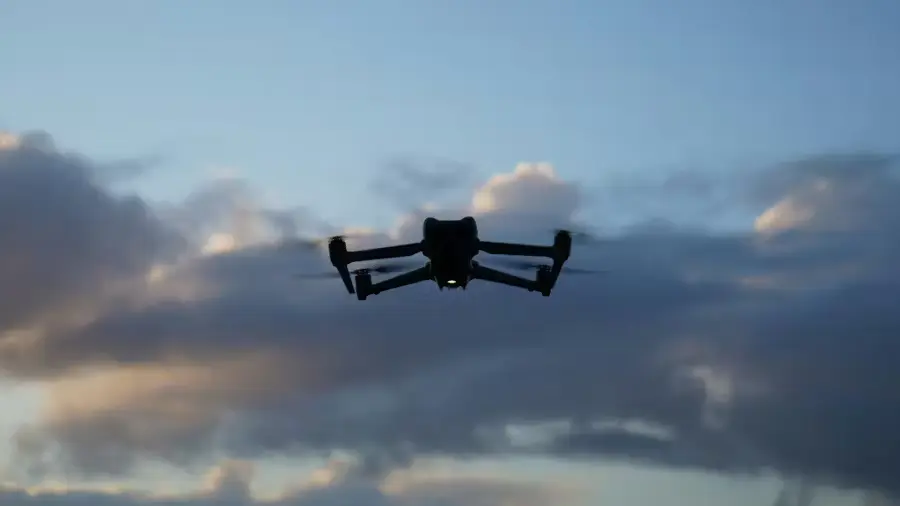
Researchers at the Indian Institute of Technology (IIT) Bombay) have achieved a major breakthrough in drone technology by developing a GPS-free control and coordination system for autonomous drone swarms. This innovation eliminates the dependence on satellite-based navigation, allowing multiple drones to operate collaboratively even in GPS-denied environments such as dense urban areas, indoors, or battle zones.
Solving the GPS Dependency Problem
Traditional autonomous drones rely heavily on Global Positioning System (GPS) data to determine their position and movement. However, GPS signals are often weak, unreliable, or jammed in many environments, posing challenges for coordinated drone operations. The IIT Bombay team addressed this issue by developing a novel control algorithm that enables drones to sense, communicate, and coordinate with each other using onboard sensors and visual data — without external positioning support.
AI-Driven Coordination and Vision-Based Navigation
The new system uses computer vision and AI algorithms to interpret environmental cues and relative positions between drones. Through real-time image processing and inter-drone communication, the drones maintain precise formations and execute complex maneuvers collectively. This vision-based control scheme ensures stable operation even in GPS-denied zones such as forests, tunnels, or disaster-hit regions.
Applications in Defense, Disaster Management, and Industry
This breakthrough could significantly benefit defense operations, disaster relief missions, agricultural monitoring, and industrial inspections. Drone swarms can now be deployed in areas where GPS is unavailable or intentionally jammed, providing a major advantage for surveillance, mapping, and rescue operations.
Officials at IIT Bombay noted that the system was successfully tested with multiple drone formations, showing promising stability and precision in real-world conditions.
Enhancing India’s Indigenous Drone Capabilities
The development aligns with India’s efforts to advance indigenous drone technologies under initiatives such as ‘Make in India’ and ‘Aatmanirbhar Bharat.’ By reducing dependency on foreign navigation systems, this research strengthens the country’s strategic autonomy in unmanned aerial vehicle (UAV) innovation. IIT Bombay’s achievement places India among the few global research hubs advancing GPS-independent swarm intelligence.
Future Outlook and Research Expansion
The research team plans to extend the system to handle larger swarms and dynamic environments, integrating advanced machine learning techniques for adaptive navigation. Further collaboration with defense agencies and drone startups is expected to accelerate its commercial and military deployment in the coming years.