
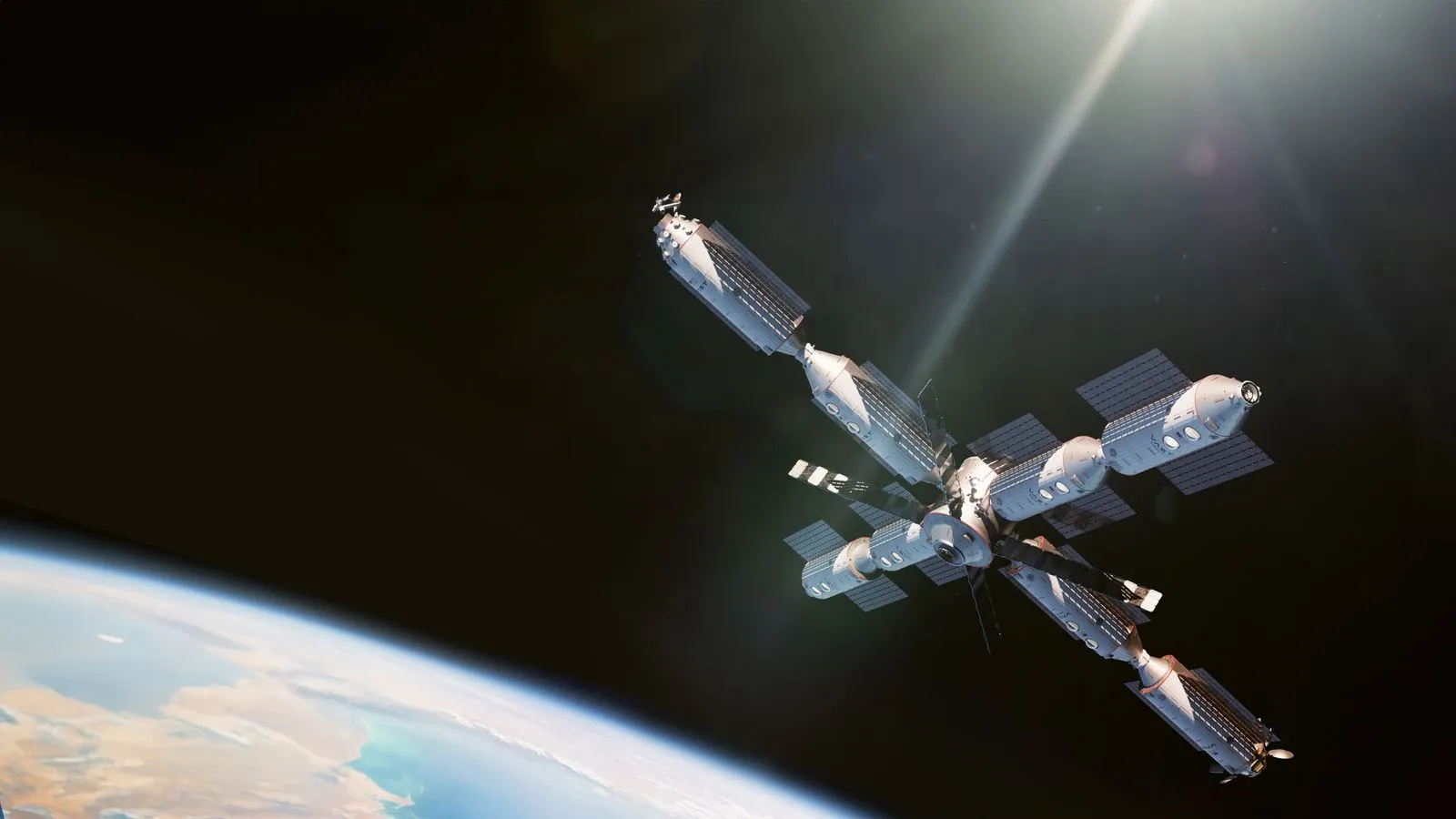
California-based space startup Vast Space has announced that it will launch Haven-1, the world’s first privately-owned space station, in 2026. Designed to serve as a standalone orbital outpost, the project aims to revolutionize commercial spaceflight by offering a fully private platform for research, tourism, and human habitation in low-Earth orbit.
Partnering with SpaceX for a Historic Launch
The launch of Haven-1 is set to take place aboard a SpaceX Falcon 9 rocket, marking a crucial milestone in the collaboration between private aerospace companies. The partnership will also include Vast-1, the station’s first crewed mission, using SpaceX’s Dragon spacecraft to transport up to four astronauts. This will be the first time a private crew travels to an independently-owned orbital station.
Designed for Long-Duration Missions and Research
Haven-1 will initially function as a small, self-contained habitat capable of supporting human life for up to 30 days. It will offer facilities for microgravity research, technology demonstrations, and space manufacturing experiments. The company also plans to integrate artificial gravity systems in future versions of the station—an innovation that could dramatically improve long-term human health in space.
A Vision Beyond the International Space Station
With the International Space Station (ISS) expected to retire in the coming decade, Vast Space sees an opportunity to fill the gap in orbital infrastructure. CEO Jed McCaleb, known for his ventures in technology and blockchain, emphasized that Haven-1 is just the beginning. “We envision a future where thousands of people live and work in space, and Haven-1 is the first step toward that goal,” McCaleb stated.
Commercial Space Living Becomes a Reality
Vast Space’s Haven-1 mission marks a significant shift toward commercial space living and private sector-led exploration. The company is also inviting space agencies, private researchers, and tourists to participate in upcoming missions. The project could open the door for a new era of space commerce, scientific innovation, and orbital residency—once limited to government-run programs.
Future Plans and Expansion
After Haven-1’s successful deployment, Vast plans to expand modularly, connecting additional habitats to create larger stations. Long-term objectives include building rotating space stations capable of generating artificial gravity, a key requirement for sustaining human life during deep space missions to the Moon and Mars.