
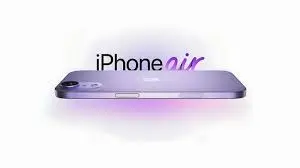
Apple has once again pushed the boundaries of innovation with the introduction of the iPhone Air, a revolutionary addition to its iconic lineup. Designed to be the lightest and thinnest iPhone ever, the iPhone Air marks a major departure from traditional smartphone architecture, focusing on portability, efficiency, and a refined minimalist aesthetic.
Ultra-Light Design Meets Premium Performance
The iPhone Air features a stunning aerospace-grade titanium and carbon composite frame, reducing overall weight by nearly 25% compared to the iPhone 15 Pro. Despite its slim profile, the phone maintains structural integrity and a sleek, futuristic look. Apple engineers have reportedly developed a new “AirCore” internal layout, optimizing battery, chip, and antenna placement for improved heat management and performance.
Next-Generation Display and Battery Efficiency
At the heart of the iPhone Air is a 6.1-inch OLED “AirDisplay” — thinner, brighter, and more power-efficient than any display Apple has produced. The company claims the new screen technology can deliver up to 30% better energy efficiency, resulting in longer battery life without compromising on clarity or color accuracy. Combined with the A19 Bionic chip, the iPhone Air promises top-tier performance with lower thermal output.
Focus on Sustainability and Materials Innovation
In line with Apple’s 2030 carbon-neutral goal, the iPhone Air emphasizes sustainability. The device uses 100% recycled rare earth elements, and its packaging is fully biodegradable. Apple also replaced several metallic components with graphene-based materials, which enhance durability while keeping weight minimal.
New Software Experience with iOS 19 Air-Optimized Features
The iPhone Air launches alongside iOS 19, featuring a redesigned interface that complements its sleek form factor. The system includes new “AirMode” battery optimization, adaptive color temperatures, and gesture-based navigation inspired by the Apple Watch Ultra. AI integration through Apple Intelligence enhances Siri’s responsiveness and contextual understanding.
Expected Pricing and Availability
According to industry insiders, the iPhone Air could start at around $999, positioning it between the iPhone 16 and 16 Pro models. Apple is expected to unveil the device in early 2026, with production already in the testing phase at Foxconn’s facilities in China and India.
A Glimpse into the Future of Smartphones
The iPhone Air isn’t just another iteration — it represents Apple’s vision for the next decade of mobility. With its fusion of lightweight design, intelligent performance, and environmental responsibility, the iPhone Air could set a new benchmark for the global smartphone industry.